
Do you prioritize Revenue Generating Activities?
Author
 Rob Manne
| Published: June 17, 2026
Rob Manne
| Published: June 17, 2026
Of all the tasks that workers do, Revenue Generating Activities (RGAs) are the ones that make the biggest and most direct contribution to revenue.

Of all the tasks that workers do, Revenue Generating Activities (RGAs) are the ones that make the biggest and most direct contribution to revenue.
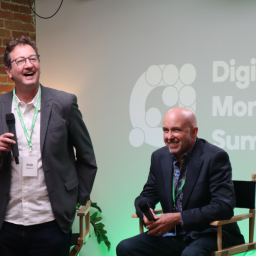
RGAs came up a few times at last week’s excellent RevStar conference.
Whether you work in GTM, sales, marketing or customer experience, there are countless tasks you need to do on a given day.
Some might be important, others urgent. Ideally all of them are aligned with your company’s strategy.
The reality is that many activities are “busy work” that don’t contribute to revenue.
And typically the bigger your organization gets, the less time you get to spend revenue generating activities.
If you want to be more effective and competitive, RGAs are something all teams ought to track.
Here are five steps your organization can take to grow its Revenue Generating Activities.
1. Define what Revenue Generative Activities are for your team
In GTM, closing a new customer is clearly an RGA.
So is keeping a customer from churning.
But attending an internal brainstorm about the office summer party?
That IS NOT an RGA.
Look at all the tasks your team does regularly and define which one is an RGA.
You can also give each task an RGA rating from 1 to 5.
2. Track your team’s RGA ratio
Now that you know your RGAs, it’s time to evaluate how much time you spend each week on them vs. busy work.
Use AI or a PM tool to automatically track or code your RGAs.
Then look at the numbers.
Does your team do RGAs 80% of the time? Or just 10%?
Prepare to be surprised at what you find.

3. Determine your achievable RGA target
Whatever the RGA ratio is, treat that as a benchmark.
Then identify what you feel your target number should be, possibly per person, and then work with the team on it.
I find it’s best to lead by example. Start by analyzing your own time and then share it with your team.
Then measure to manage. Discuss the RGAs per role and how to get your RGA number up.
Look at how you’re performing after a few weeks or months.
4. Plan your day around your RGAs
It doesn’t make sense to do cold calls on Friday afternoon.
Increasing the amount of your team’s RGAs can often come down to better planning.
For non-RGAs that are still essential, do them at times your team would be most effective that do not conflict with crucial RGA times or days.
5. Offload non-Revenue Generating Activities wherever possible
This is the biggie. One leader said he’s on a mission to ensure 100% of his team’s time goes towards revenue generating activities.
This can be done by using AI or platforms to help with things like research, prospecting, reporting, insights, operations, administration and more.
It can also be done by adding operational people to your team or outsourcing specific tasks to a more efficient team or external partner.
Looking to prioritize Revenue Generating Activities in your organization?
It’s definitely worth doing, but there can be several rabbit holes.
And watch for the irony: spending excessive time uncovering RGA gaps might make you LESS profitable!